

Effective Stress Relief Techniques: How to Manage Stress in a Healthy Way
Stress is a common part of life, but chronic stress can lead to serious health issues if not managed effectively. Whether you’re dealing with work-related stress, family pressures, or the demands of daily life, it’s crucial to learn how to cope with and reduce stress. In this article, we will explore a variety of stress relief techniques that can help you feel more relaxed, focused, and in control.
:max_bytes(150000):strip_icc()/3145195-article-tips-to-reduce-stress-5a8c75818e1b6e0036533c47-922c3155e9c846eaa7447c75030b2c13.png)
What is Stress and How Does it Affect You?
Stress is the body’s natural response to challenges or demands, both physical and emotional. While short-term stress can be helpful in certain situations, chronic stress can have a negative impact on your health. Stress affects your body in numerous ways, including:
-
Physical symptoms, such as headaches, fatigue, and muscle tension.
-
Mental health issues, including anxiety, depression, and difficulty concentrating.
-
Long-term health problems, like heart disease, high blood pressure, and digestive disorders.
Understanding how stress affects your body and mind is the first step toward managing it effectively.
Related article: Understanding How Stress Impacts Your Health
Why Stress Relief is Important
Reducing stress is essential for maintaining your overall well-being. If stress is not managed, it can lead to burnout, physical illness, and emotional exhaustion. By using proven stress relief techniques, you can improve both your mental and physical health, boost your mood, and regain a sense of balance in your life.
Here are some key benefits of managing stress effectively:
-
Improved focus and productivity at work and in your personal life.
-
Better sleep quality, as stress often leads to insomnia or restless nights.
-
Increased emotional resilience, allowing you to handle difficult situations with more ease.
Related article: Why Managing Stress is Key to Mental Health
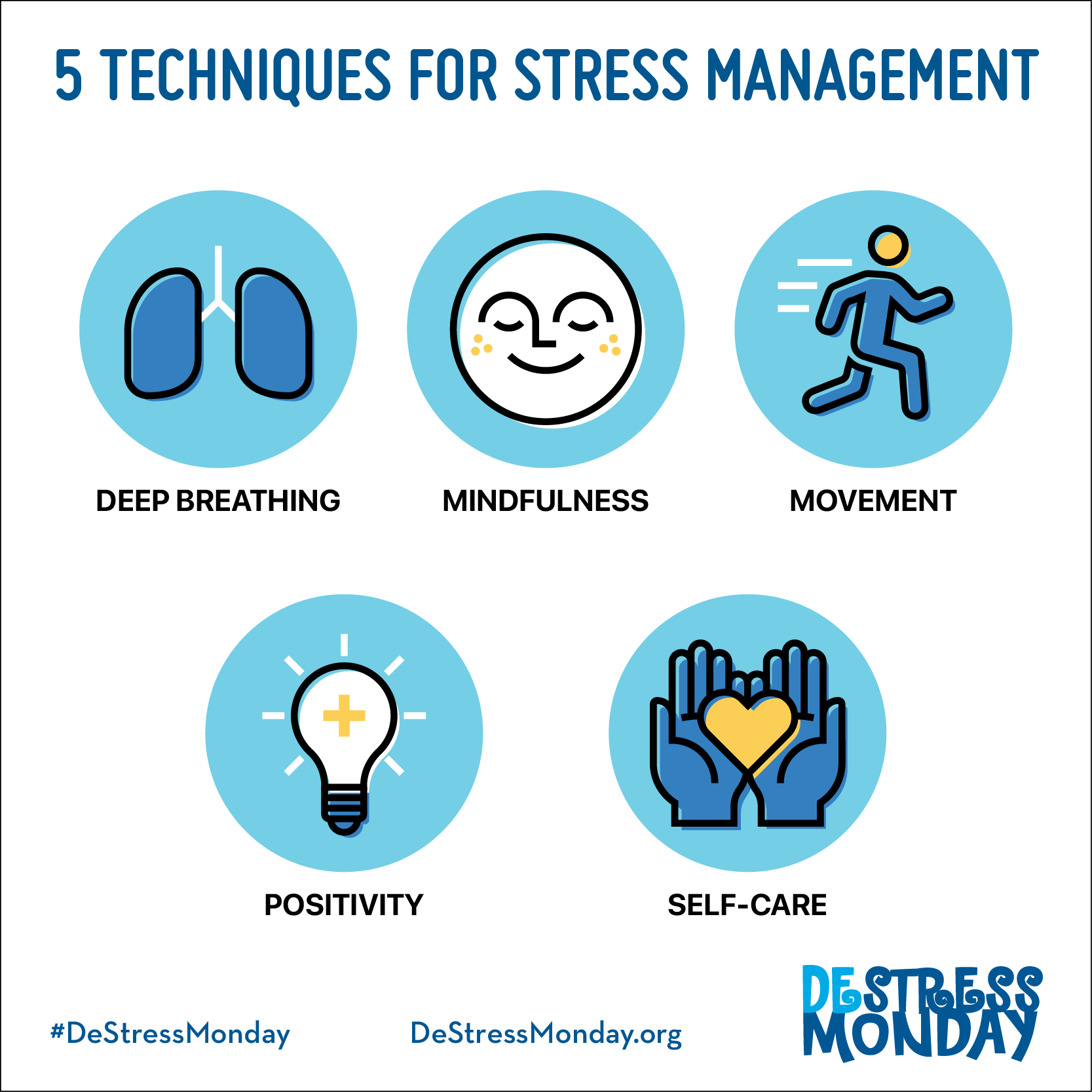
1. Deep Breathing Exercises
One of the simplest and most effective stress relief techniques is deep breathing. Deep breathing helps activate your body’s relaxation response, lowering your heart rate and calming your nervous system. It can be done anywhere and takes only a few minutes.
How to Practice Deep Breathing:
-
Sit or lie down in a comfortable position.
-
Close your eyes and take a slow, deep breath through your nose, counting to four.
-
Hold the breath for four seconds.
-
Exhale slowly through your mouth for a count of six.
-
Repeat for several minutes, focusing on the sensation of the breath.
Deep breathing is a powerful tool for reducing stress, calming your mind, and enhancing focus.
Related article: Mastering Breathing Techniques for Stress Relief
2. Mindfulness Meditation
Mindfulness meditation is another highly effective technique for managing stress. By practicing mindfulness, you train your mind to stay present and fully engaged in the moment, which helps reduce the tendency to ruminate on stressors.
How to Practice Mindfulness Meditation:
-
Find a quiet, comfortable space where you can sit undisturbed.
-
Close your eyes and take a few deep breaths.
-
Focus your attention on the present moment. If your mind starts to wander, gently bring your focus back to your breath.
-
Start with 5-10 minutes a day and gradually increase the time.
Regular mindfulness practice can help lower stress levels, improve emotional well-being, and increase self-awareness.
Related article: The Power of Mindfulness Meditation for Stress
:max_bytes(150000):strip_icc()/how-to-reduce-stress-5207327_FINAL-907db114a640431ba1e8ecbb9e81b77f.jpg)
3. Physical Exercise
Physical activity is one of the best ways to reduce stress. Exercise releases endorphins, the body’s natural feel-good chemicals, which can improve your mood and lower stress levels. Additionally, regular exercise helps with physical health, energy levels, and overall well-being.
Effective Exercises for Stress Relief:
-
Yoga: Combines physical movement with breathing exercises to reduce tension and promote relaxation.
-
Walking: A simple, low-impact exercise that can help clear your mind and improve mood.
-
Strength training: Helps build resilience, both physically and mentally.
Aim for at least 30 minutes of moderate exercise a few times a week to experience the benefits.
Related article: How Exercise Reduces Stress
4. Progressive Muscle Relaxation
Progressive Muscle Relaxation (PMR) is a relaxation technique where you tense and then release each muscle group in your body. This technique helps you become more aware of physical tension, and with practice, it teaches your body how to relax fully.
How to Practice Progressive Muscle Relaxation:
-
Find a quiet place and lie down or sit in a comfortable position.
-
Starting with your toes, tense the muscles in your feet for 5 seconds, then relax them.
-
Gradually work your way up through each muscle group, tensing and releasing as you go.
-
Focus on the difference between the feeling of tension and relaxation.
PMR is effective in reducing both physical and mental stress.
Related article: Step-by-Step Guide to Progressive Muscle Relaxation
5. Time Management
Often, stress arises from feeling overwhelmed by too many tasks and not enough time. Time management can help reduce stress by giving you a clear sense of control over your responsibilities. When you manage your time effectively, you can reduce feelings of pressure and increase productivity.
Time Management Tips for Stress Relief:
-
Prioritize your tasks by identifying the most important and urgent ones.
-
Break tasks into smaller steps to avoid feeling overwhelmed.
-
Set realistic goals and allow for breaks between tasks.
-
Learn to say no when your plate is full.
By using time management techniques, you can reduce stress and feel more organized.
Related article: How Effective Time Management Reduces Stress
6. Social Support
Having a strong social support system is essential for coping with stress. Talking to friends, family members, or a therapist can provide emotional support and perspective, helping you navigate stressful situations more effectively.
Ways to Build Social Support:
-
Connect with friends and family regularly to share your experiences and feelings.
-
Join support groups where you can meet others facing similar challenges.
-
Seek professional help if you feel overwhelmed or need guidance.
Strong social connections can help buffer against stress and improve your emotional well-being.
Related article: The Importance of Social Support for Stress Relief
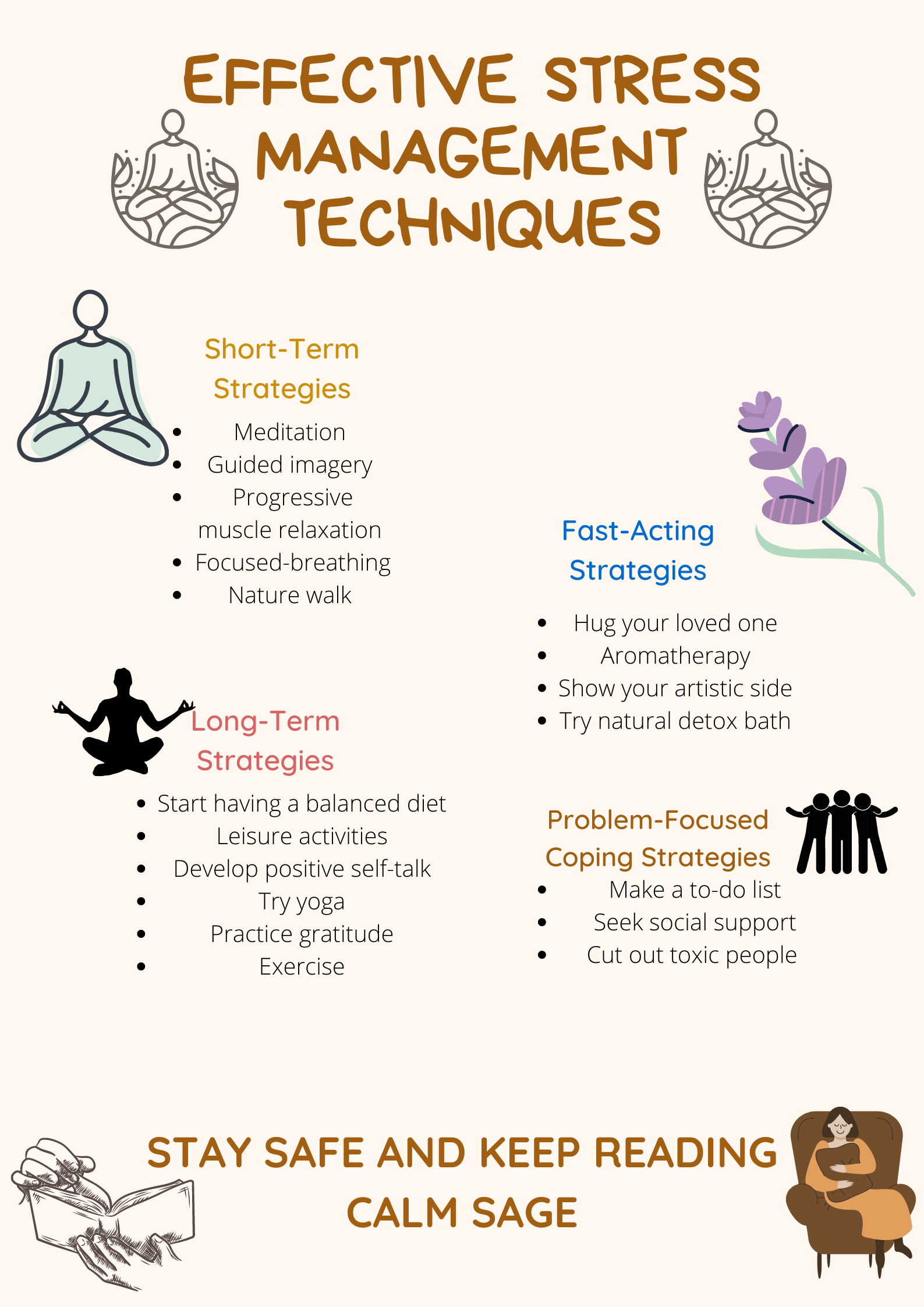
7. Relaxation Techniques
There are several relaxation techniques that can help reduce stress and improve your overall sense of well-being. Practices like aromatherapy, listening to soothing music, or taking a warm bath can be incredibly effective at calming the body and mind.
Relaxation Techniques to Try:
-
Aromatherapy: Use essential oils like lavender or chamomile to promote relaxation.
-
Listening to music: Play calming or instrumental music to soothe your nerves.
-
Taking a warm bath: This can help relax your muscles and calm your mind.
Incorporating relaxation techniques into your daily routine can help you unwind and reduce stress.
Related article: Top Relaxation Techniques for Stress Relief
FAQs About Stress Relief Techniques
Q: How long should I practice relaxation techniques each day?
A: Even a few minutes a day can make a significant difference. Start with 5-10 minutes and gradually increase the time as you become more comfortable.
Q: Can stress relief techniques help with anxiety?
A: Yes, many stress relief techniques, like deep breathing and mindfulness meditation, are also effective for managing anxiety.
Q: How can I find the right stress relief technique for me?
A: It’s important to try different techniques and see what works best for you. Everyone reacts differently, so experiment with various methods to find what resonates with you.
Conclusion
Managing stress is essential for maintaining a healthy and balanced life. By incorporating stress relief techniques such as deep breathing, mindfulness meditation, exercise, and time management, you can significantly reduce stress and improve your overall well-being. Remember, stress is a natural part of life, but with the right tools, you can handle it with grace and resilience.